Heritage Quest Luxembourg

Description

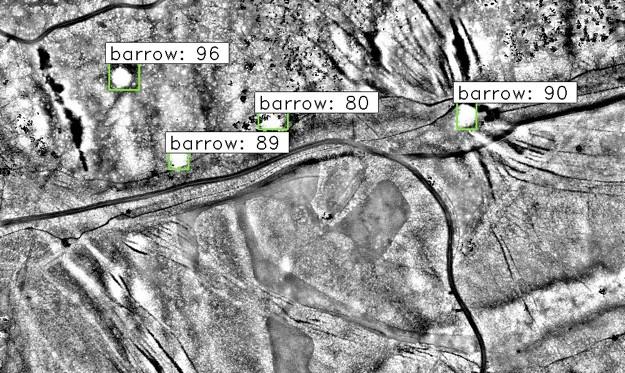
The aim of this project is to find archaeological remains hidden under dense vegetation cover, especially prehistoric burial mounds and ancient roads. In recent years high-resolution elevation maps created with a technique called LiDAR have become widely available. The big advantage compared to many other measurement techniques is that LiDAR is not hampered by the presence of vegetation. This allows the investigation of areas in which archaeological remains are currently obscured by forest cover or other types of vegetation.

Based on the success of the Heritage Quest, initiated by the University of Leiden, this project will help to uncover new sites on the territory of the Grand-Duchy of Luxembourg, a diverse region including the densely forested highlands of the Eisleck and the valleys of the Guttland.

Since 2019, the Heritage Quest has investigated two regions of the Netherlands with spectacular results. The Veluwe and the Utrechtse Heuvelrug regions have yielded large number of burial mounds. Luxembourg is likely to produce equally spectacular results. The dense forest cover, for instance along outcrops of Luxembourg sandstone(Grès de Luxembourg), undoubtedly hides many more archaeological sites.

By jointly inspecting the c. 2,586 km2 of the territory of present-day Luxembourg we are certain that many unknown archaeological remains will be discovered. These new discoveries will inform our understanding of past societies and will be added to the national database of known archaeological features collected by the Institut National de Recherches Archéologiques (INRA) and as such protected for posterity.

Thématique

Science et technologie

Type

Application

Mots-clés

  • 3d-lidar

  • archaeological-site

  • archaeology

  • citizen-science

  • lidar

Date de création

15 juin 2026

Dernière mise à jour

15 juin 2026

3 jeux de données

Discussions

Il n'y a pas encore de discussion pour cette réutilisation.

4 réutilisations du même créateur